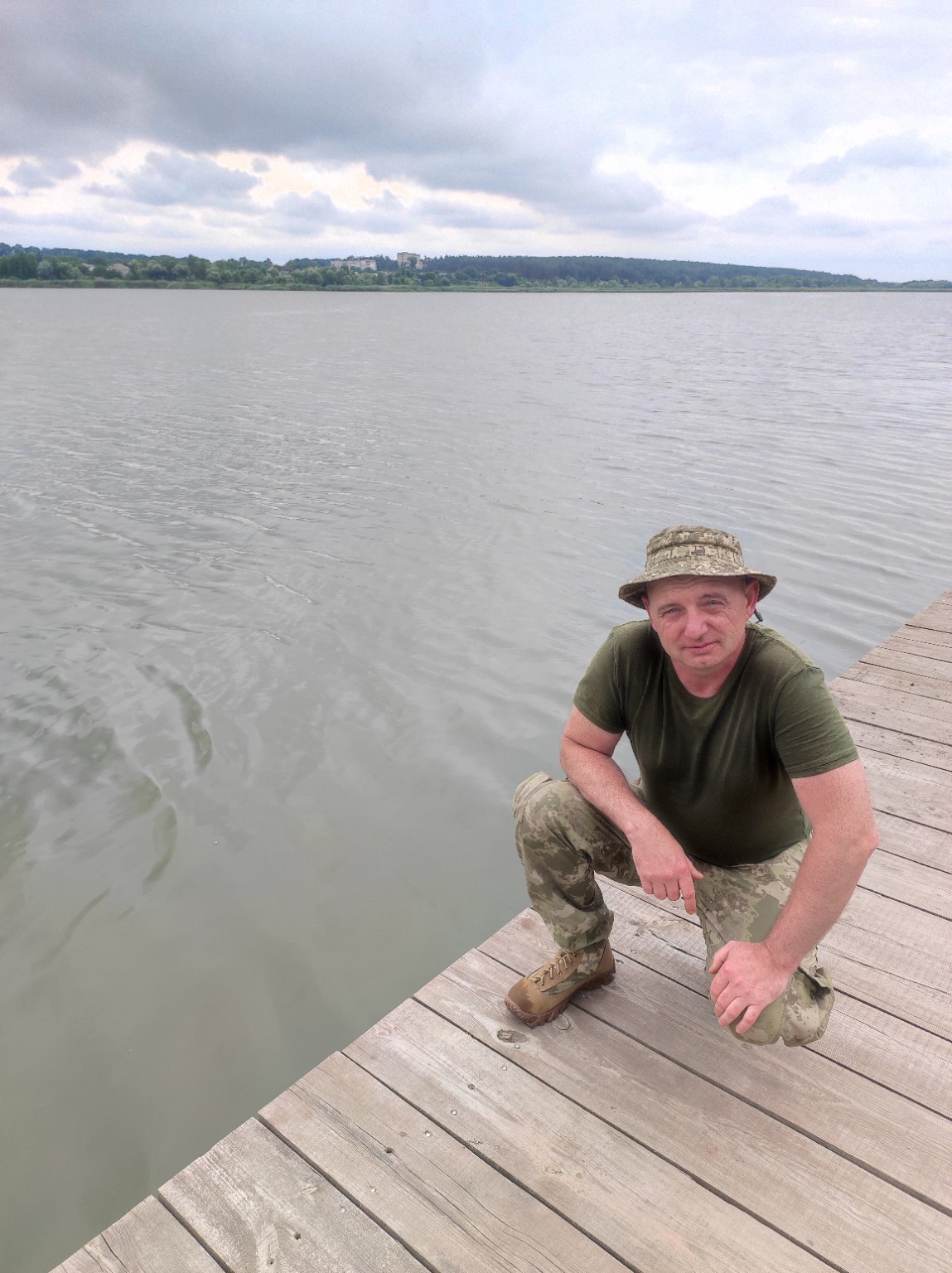
The story of a Ukrainian soldier who survived, but left a part of himself forever in September 2022.
Some days end when the sun goes down.
Others go on for years.
You wake up, have breakfast, talk to people, sometimes even laugh. From the outside, it looks like an ordinary life.
But close your eyes, and you are back there.
You hear the explosions again.
You see people who were alive only seconds earlier.
And once again you ask yourself a question that has no answer:
Why did I survive when he did not?
This is the story of one day of my war.
Not the first day on the calendar, but one of those days after which you begin life again and are never quite the same.
September 2022. Luhansk Region.
We were at a large glass factory.
War had long since become part of our daily lives. We had learned to live with danger, to fall asleep from exhaustion and wake to explosions.
But that day was different.
Shelling woke us. The Russians had discovered our position.
It seemed they were firing everything they had at us: Grad rockets and cluster munitions. At the time, I also thought they were using air-dropped cluster bombs, though I could not identify them with certainty.
We went down into the basement.
There were two tanks, several vehicles and a BMP-2 infantry fighting vehicle. Concrete walls, military equipment, and people trying to find some kind of shelter.
The shells kept exploding above us.
At moments like that, the future shrinks to one short wish:
If only I can survive the next explosion.
Druzhok
Then, through the thunder of the shelling, we suddenly heard barking.
It was our dog, Druzhok. A fragment had wounded his leg.
Shells were exploding all around us. People were sheltering behind concrete walls, and every step outside could be your last. Yet one of my brothers-in-arms went up to help the wounded dog.
Not because he was ordered to. Not for a reward.
Simply because another living creature was suffering nearby.
I often think such moments reveal who a person really is. In the middle of a war, where life can end in a second, someone still cannot turn away from another creature’s pain.
A Few Seconds
I looked outside through a narrow gap between the concrete slabs.
My commander was standing there — alive, a familiar man I had served beside. I did not know I was seeing him for the last time.
The next instant, a shell exploded at his feet.
The blast tore his body apart. Parts were thrown in different directions; his head, still in its helmet, flew toward me. Where he had just stood, part of his body remained in its body armour.
I saw it with my own eyes, through that narrow gap between the concrete slabs.
There was so little space between us.
He died.
And I survived.
A moment earlier, we had been two living people. Then there was only me — and the memory.
The Hardest Part Begins After the Explosion
In films, when a soldier dies, the scene changes, sad music plays, and the viewer wipes away a tear.
In real life, no one calls, “Cut.”
The fallen soldier’s body must be recovered. If an explosion has torn a person apart, someone has to find what remains, gather it and carry it so that the person can return home.
This is not just a fallen soldier in front of you. This is someone you were speaking to not long ago, someone whose voice you heard and whose face you remember.
You bend down and lift his remains, not because you are unafraid or untouched by pain, but because you cannot leave your brother-in-arms there.
He can no longer make the journey home on his own.
The Closed Coffin
Far from the front, there is a home. Perhaps his shoes are still standing there, and his messages are still on someone’s phone. Someone remembers their last conversation and goes over every word in their mind.
And then he comes home — but not the way they waited for him.
He arrives in a closed coffin, because sometimes war does not even leave a family the chance to see the face of the person they loved one last time.
You can place your hand on the lid, say everything you never managed to say, ask forgiveness, whisper, “Come back.”
But there will be no answer.
The tragedy is not only that a person has died. It is also everything that person will never live to experience: another spring, another embrace, the fulfilment of a dream, the simple words:
“I’m home.”
And the World Goes On
Somewhere far away, people wake to alarm clocks, complain about the weather, hurry to work and plan their weekends.
And that is good. The chance to live such an ordinary life is exactly what we are fighting for.
But the next time you hear on the news, “One soldier was killed,” remember that behind that number is an entire world: a person, a voice, dreams, family, and someone who was there in the final seconds and will carry that memory for the rest of their life.
I do not want my commander to be remembered only for how he died. Until that terrible second, he was alive and had a right to a future.
Russia’s war took that right away from him.
What Happened to Me?
I survived.
You might think that is what matters most. But surviving does not always mean returning to a normal life.
The years passed. My uniform became a familiar part of me, but underneath it remained an ordinary person — a man who wants to go home, be healthy, make plans and know he will have time to fulfil them.
I am still serving today. My legs and joints hurt. Years of war have taken a toll on my health, and I need treatment.
Sometimes I want so little: to wake up without pain, to walk down a street without thinking about every step, to see a peaceful day and feel that my life is not over.
That there is still time ahead — not only for struggle, but for happiness.
I Want to Do a Good Deed
Perhaps you found this page by chance. Perhaps you opened Google and typed:
“I want to do a good deed.”
You were looking for someone to help, hoping to support a stranger, do something meaningful or give someone a little hope.
And now you are reading my story.
I do not know who you are. Perhaps you live in a big American city, a small town in Canada or Britain, or somewhere else far from Ukraine. You have your own life, worries and difficulties I know nothing about.
So I have no right to demand your help.
But I want to ask you one thing: please do not see me only as a soldier from a distant country. Try to see a human being.
I want to live and recover, too. I dream of a day when the war is behind me and there is more ahead than pain and memories.
If you can help with my medical treatment, I will be deeply grateful. If you cannot, please tell someone else about my story. Sometimes sharing a single link can reach someone who really is able to help.
And if today you were wondering how to do a good deed, remember:
Kindness is not always measured in money. Sometimes it begins simply by noticing another person’s pain.
Once, in the middle of shelling, one of my brothers-in-arms heard an injured dog and went to help him.
War was raging all around him.
And he remained human.
Perhaps that is what keeps our world together: people who do not lose their ability to care, even in the darkest times.
If you have read my story to the end, I want to say just two words:
Thank you.
For your time, for listening, and for letting my commander, my comrades and my story become part of your life, even for a few minutes.
I do not know whether I will ever be able to thank everyone who helps me in person. But I dearly hope to live to write my next story.
Not about explosions, death or pain.
But about an ordinary morning when I wake up healthy, open the window and realise:
I have finally come back to life.
With respect and hope,
Petro Voloshynovskyi
Ukrainian soldier
My story and ways to support my medical treatment — One Day of a Soldier
Based on my personal account published in Lekh Magazine on October 21, 2026, under the title “One Day That Stayed With Me.”
Want to help with my medical treatment today? Visit my website to read more and choose a way to support me. If you cannot donate, please share this link with friends or on social media. One concrete act — a donation or sharing my story — can bring me closer to treatment and a life without constant pain.